 Gilbert Mold Removal
 Mold Inspection & Testing in Gilbert, Arizona
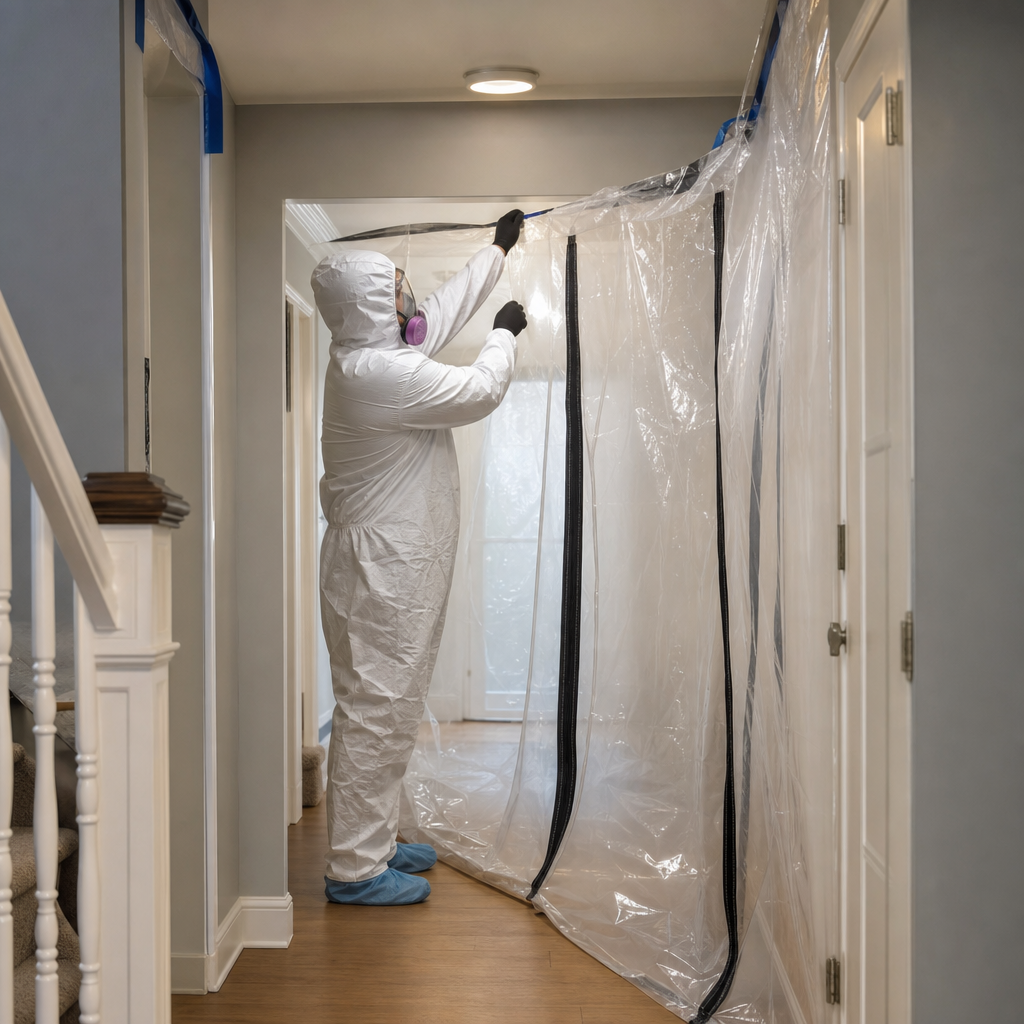
A professional mold inspection in Gilbert runs $300–$700 and answers two questions: is there a mold problem, and where is the moisture feeding it. If you can already see mold, you usually don’t need testing. You need removal. If mold is hidden, suspected, or you need lab documentation for a real estate deal or a landlord dispute, an inspection with air and surface sampling is the right first step.
That honesty matters, because plenty of companies sell testing to everyone. Here’s how to know which situation you’re in.
When mold testing is worth paying for
Testing makes sense when you need information you can’t get by looking:
- You smell mold but can’t find it. A musty odor near an AC closet, behind a laundry wall, or in a bathroom with no visible growth means the mold is inside a wall cavity, under flooring, or in the air handler. Air sampling shows whether spore counts are elevated and roughly where.
- You’re buying or selling a home. Gilbert’s resale market moves fast, and a lab report settles arguments that a visual opinion can’t. Pre-purchase sampling in a 1980s or 90s Val Vista Lakes or early-2000s Power Ranch home is cheap insurance against inheriting a slab leak nobody disclosed.
- Tenant/landlord disputes. Arizona landlords aren’t governed by a state mold statute, so documentation is what carries weight. Independent lab results establish facts either side can rely on.
- Post-remediation clearance. After any professional mold remediation, clearance testing verifies spore counts inside the containment area are back to normal before the barriers come down. Never skip this. It’s the proof the job worked.
- After water damage that “dried on its own.” If a water heater leaked or a monsoon storm pushed water in and you dried it with box fans, sampling tells you whether mold got started inside the assembly before things dried out.
When testing is a waste of your money
If there’s visible mold on drywall, baseboards, or a shower ceiling, testing rarely changes anything. Every credible national guideline says the same thing: visible mold should be removed regardless of species, and the remediation protocol (containment, removal of affected material, HEPA cleaning) is the same whether the lab says Cladosporium or Stachybotrys. Paying $500 to confirm what your eyes already told you just delays the fix. In that case, skip straight to a remediation assessment, which is commonly free.
The one exception: some insurance claims and escrow negotiations require lab documentation even when mold is visible. If that’s your situation, sample, but know why you’re paying for it.
What a Gilbert mold inspection includes
A good inspection works through the house the way moisture actually moves through it:
- Interview. What you’ve smelled, seen, and fixed. Past leaks, AC service history, any monsoon damage from July–September storms.
- Visual inspection. Bathrooms, kitchen, laundry, water heater, the indoor AC closet or attic air handler, window sills, and ceiling below any roof penetration or parapet section.
- Moisture mapping. Moisture meters and thermal imaging find wet material behind drywall and under flooring without opening anything up. In slab-on-grade Gilbert homes, this is how slab leaks get found before they become five-figure problems.
- Air sampling. Spore-trap cassettes pulled inside the home and compared against an outdoor baseline. Elevated indoor counts, especially of water-marker species, mean an active source.
- Surface sampling. Tape lifts or swabs of suspect staining, so the lab can confirm whether that dark patch is mold or just dust and soot.
- Written report with lab results. Findings, photos, moisture readings, lab data, and a plain-English recommendation: no action needed, monitor, or remediate, with a scope you can put in front of any contractor, not just the one who wrote it.
Samples should go to an independent accredited lab, so nobody grades their own homework.
Why Gilbert homes hide mold well
Gilbert reads as the last place mold should live. It’s a desert. But the housing stock here works against you. Most of the town was built between the mid-1980s and the late 2000s: Val Vista Lakes, The Islands, Seville, Morrison Ranch, Lyons Gate, Higley Groves, Cooley Station. Those homes are now hitting the age where the first generation of plumbing fittings, water heaters, and AC systems fail, and modern builds are sealed tight for energy efficiency, so when moisture gets in, it stays in.
Three patterns account for most hidden mold here:
| Hidden source | Where it shows up | Season |
|---|---|---|
| AC condensate clog or coil condensation | Indoor AC closet, attic platform, ceiling below air handler | June–September |
| Slab or pinhole copper leak | Baseboards, flooring edges, closet carpet | Year-round |
| Roof/monsoon intrusion | Ceiling drywall, attic insulation, parapet walls | July–September |
During monsoon season, dew points in the East Valley run 55–65°F and indoor humidity climbs, and an AC system sized to fight 115° heat does very little dehumidifying. That’s when marginal moisture problems tip into active growth. If your problem showed up after a storm, start with the monsoon and roof leak mold page.
No state mold license in Arizona: read this before hiring anyone
Arizona has no state license for mold inspection or mold remediation. Anyone with a truck and a moisture meter can call themselves a mold inspector here. That’s not a scare line. It’s the single most important thing to know before you hire.
So verify three things instead: IICRC certification (the national standard for inspection and remediation training), independence of the lab analyzing samples, and whether the inspector also profits from the remediation they recommend. That last one matters: many local companies do both inspection and remediation, so ask for a report with the raw lab data and a scope any other contractor can bid. You should never be locked in.
What happens after the inspection
If results come back clean, you get a report saying so, useful for closings and peace of mind, and that’s the end of it. If there’s a problem, the report defines the scope: how many square feet, which materials, what the moisture source is. Small confirmed problems move to mold remediation; black-mold findings get handled under stricter containment via black mold removal; active leaks get dried first through water damage cleanup. Full cost ranges for all of it are published on the pricing page, no mystery numbers.
We take inspection requests from across Gilbert and the East Valley, including Chandler, Mesa, Queen Creek, and San Tan Valley. At a few hundred dollars, an inspection is the affordable end of this trade, and often the only money a worried homeowner ever needs to spend. Get a fast quote, and expect a straight answer on whether you even need one.
Frequently Asked Questions
How much does a mold inspection cost in Gilbert?
A professional mold inspection in Gilbert typically runs $300–$700 depending on the size of the home and how many air or surface samples the lab needs to process. A visual-only assessment costs less than one with full sampling. Get the price before anyone shows up.
Do I need mold testing if I can already see mold?
Usually not. If you can see mold, the fix is removal, a lab report naming the species doesn't change the remediation protocol. Testing earns its cost when mold is suspected but hidden, when you need documentation for a home sale or landlord dispute, or for post-remediation clearance.
How long do mold test results take?
Most air and surface samples come back from the lab in 2–3 business days. Rush processing is available when a home sale or escrow deadline is on the line.
Can you test the air inside my AC ducts?
Yes. An inspector can pull samples at supply registers and inspect the air handler and coil, which is where most hidden mold in Gilbert homes lives. If the system is the source, you'll see it in the numbers compared against an outdoor baseline sample.
Is a mold inspector required to be licensed in Arizona?
No. The state licenses neither mold inspectors nor mold remediators. That's exactly why certification matters. Ask any inspector, us included, for IICRC certification and whether sampling follows national standards; lab analysis is done by an independent accredited laboratory.